On Friday last week, the regular Kenya gazette appeared to be longer than most previous editions. It immediately got Kenyans talking because amid the COVID-19 pandemic, the publication had news about a referendum bill, signalling the likelihood of a vote to change the constitution, in the near future. But buried deep inside the voluminous document was something that may have escaped many a reader - a notice about a famous crop grown in many parts of Africa - cassava.
The gazette issue informed the country about a project that has been going on for years to find a solution to a common disease in this tuber crop, known as the Cassava Brown Streak Disease (CBSD). Typically such information would not be in the Kenya gazette, but this particular project involved a specialised and highly-regulated kind of research known as genetic modification i.e the manipulation of naturally occurring traits in living things to achieve desired results. This is what scientists have done with a certain variety of cassava to give it in-built resistance to this viral disease that can wipe off an entire crop season.
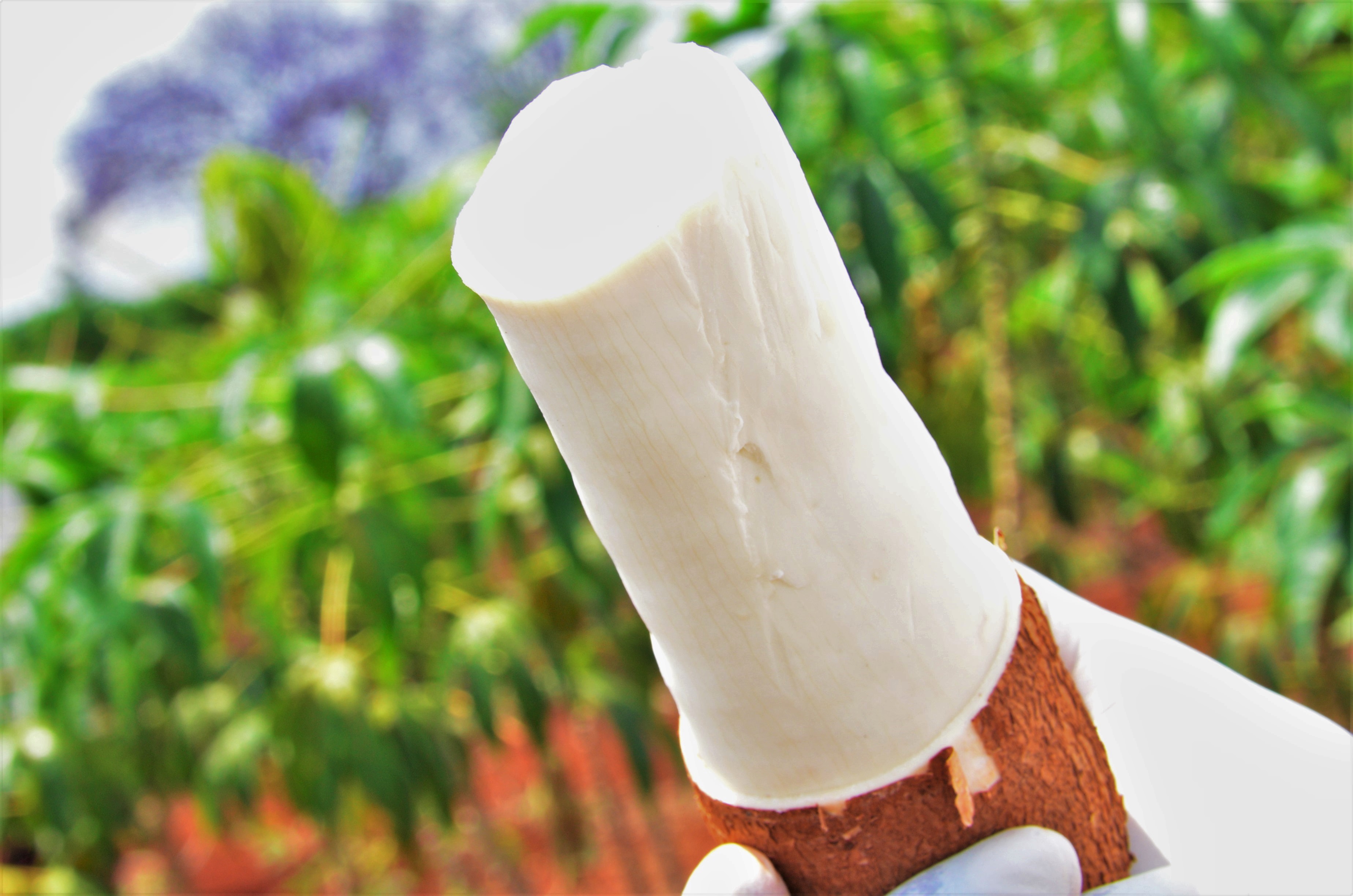
Clean improved Cassava Root from VIRCA Plus Project
The country’s premier agricultural research institute, Kenya Agriculture and Livestock Research Organisation (KALRO), which has been part of this ground breaking research, has now applied for formal approval for the growing of this newly developed variety of cassava in open fields. This is usually a critical stage in this kind of research which before now has been conducted mainly in laboratories, greenhouses and confined fields. The Biosafety Act 2009 which regulates such research requires that crops produced in this manner be approved by the regulator, the National Biosafety Authority, before they can be released to the public.
The Authority told Wanon Media that it would consider the safety of this variety to both human beings and the environment before granting its decision. The CEO, Prof Dorrington Ogoyi says the researchers have met all the regulatory requirements in the previous stages but they have to pass the final test before the variety can be released to the public.
“We have to be sure that the new variety they are introducing is substantially equivalent to the conventional variety…and that it will not somehow wipe out our existing variety or transfer some of the genes to other existing varieties”, he said, calling on members of the public to come out and give their views about the application, as required by public participation laws in Kenya.
The CSBD-resistant cassava was developed through a consortium bringing together Kenyan, Ugandan, Nigerian and American institutions under the banner of Virus Resistant Cassava for Africa (VIRCA) Plus. And the researchers say this variety, if approved, will improve livelihoods on the continent.
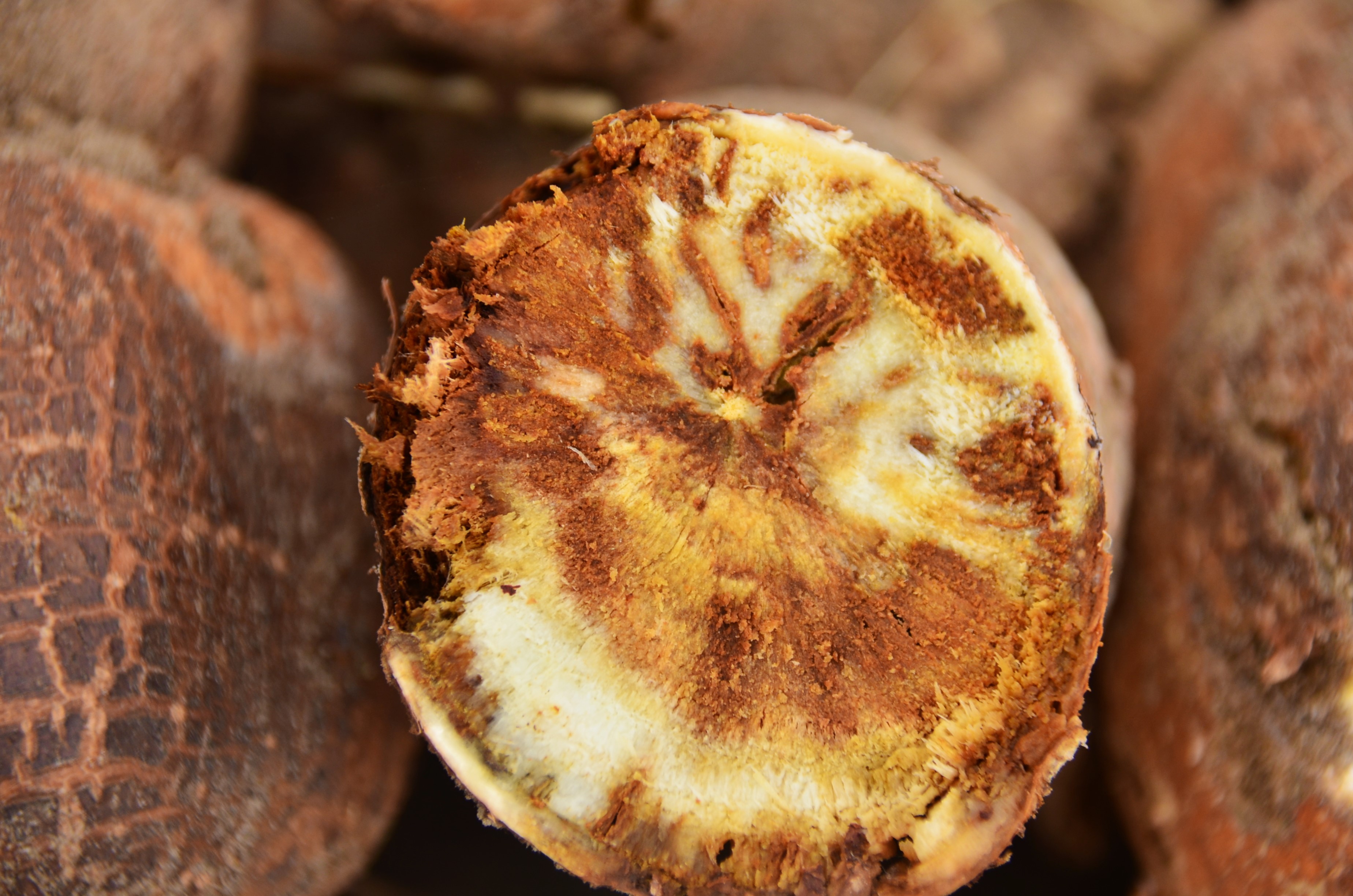
Cassava Brown Streak Affected cassava root
“The entire VIRCA Plus project team is excited to reach this milestone in improving agricultural productivity for farmers in East Africa. A positive decision by the Kenya NBA would allow us to move ahead in bringing disease-resistant versions of superior cassava varieties to breeders and farmers”, said a statement from the research team.
The researchers focused on cassava owing to its critical role in food security in Sub-Saharan Africa. According to the Food and Agriculture Organisation (FAO), Africa accounts for more than 40% of total tropical production of the crop in the world. In Kenya, it is the second most important tuber crop after Irish potato, covering about 90,000 hectares of farmland. As of 2019, the country’s annual production was estimated at 540,000 tonnes.
Crop experts consider CSBD to be one of the biggest threats to food security in coastal East Africa, where cassava is a staple food. The disease was first identified in Tanzania in 1936 and has since spread to other parts of the East African coast notably Kenya and Mozambique. Scientists have since identified the two viruses responsible for the disease namely the cassava brown streak virus (CBSV) and Ugandan cassava brown streak virus (UCBSV). The disease typically causes a yellowing of the affected leaves and rot in the roots, making the cassava tuber inedible.
“CBSD resistant cassava line 4046 exhibits high levels of resistance to infection by the two plant viruses that cause CBSD through a well-known gene silencing mechanism (RNAi)”, said the statement from VIRCA Plus, adding that farmers and consumers would now benefit from the crop’s improved root quality and increased yield.
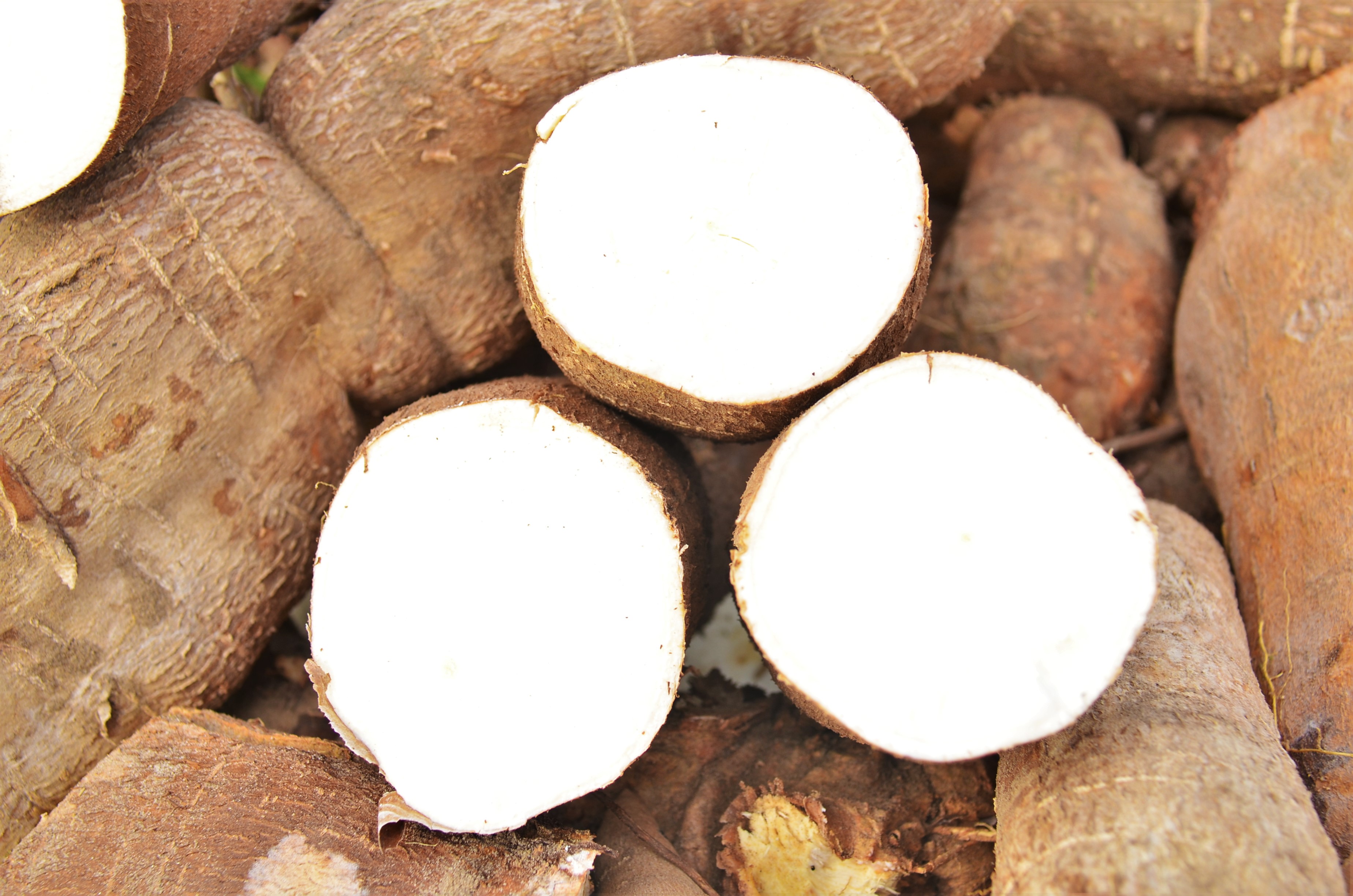
Clean improved Cassava Root from VIRCA Plus Project
The cassava project is the latest genetically modified crop to come this far in the approval process. In December last year, Kenya’s cabinet approved genetically modified cotton, known as Bt-Cotton, for release to farmers. The Indian Seed Company, Mahyco is currently getting ready to roll out these varieties in more than 20 cotton growing areas in the country.
Members of the public now have until June 14th to give their views to the regulator on whether the newly developed cassava variety should be approved or not.